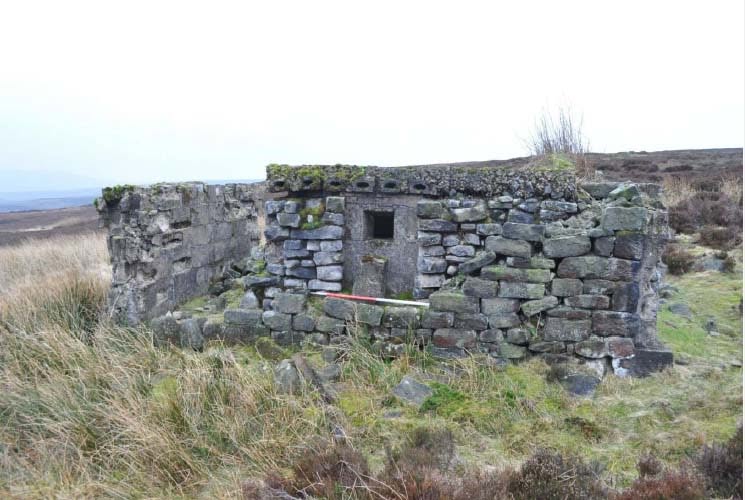
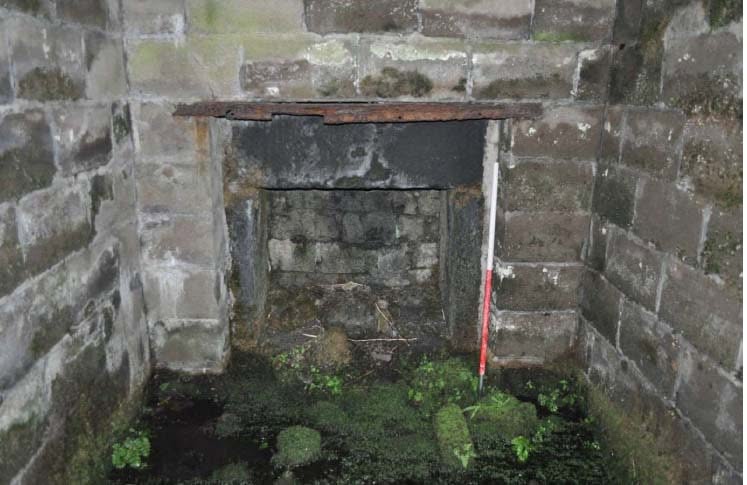
Brogging Moss Grotto was a moorland shelter used by moorland shepherds and shooting parties on Earl Fitzwilliams shooting estate until 1939.
During World War 2 1940 – 1945 it was re-purposed as a Special Fire Site.
SF became known as Starfish Decoys.
Brogging Moss Grotto was taken over by the military early in WW2 and rebuilt as a Control Bunker. They used concrete breezeblocks, trapezoid concrete framed window and a heavy concrete slab roof. It had a good vehicle access from Foulstone Road and a nearby spring for water supply. It was far away from settlements. If they were bombed, (their primary intention was to attract bombs) then the occupants needed protection.
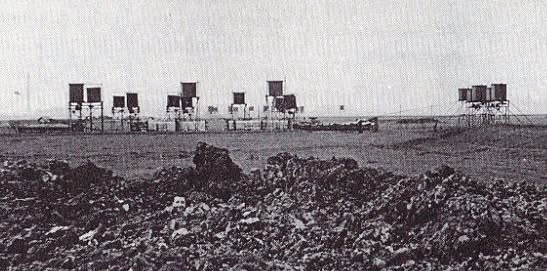
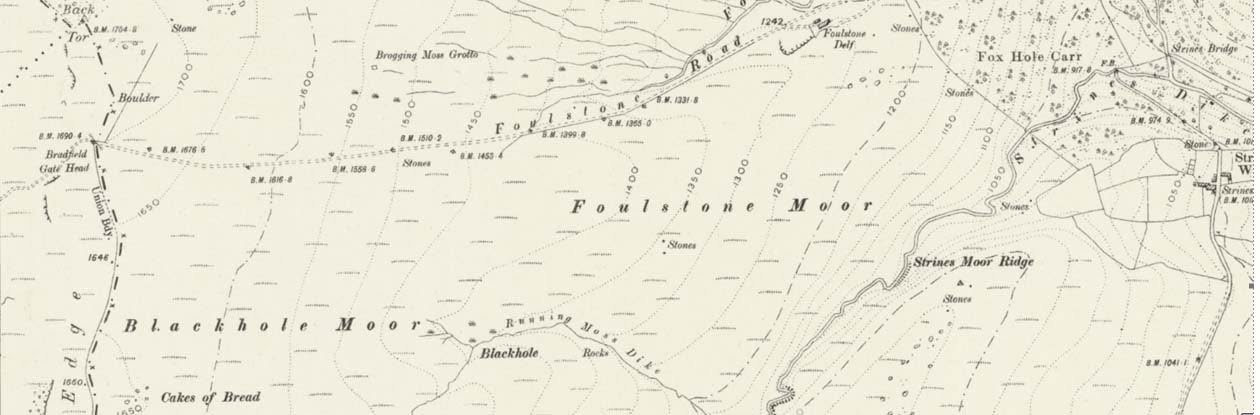
The ‘starfish decoy’ for Brogging Moss Grotto was constructed to the east and downslope, on stilt platforms and probably gravity fed by paraffin oil and water from raised tanks near the Control Bunker. There was a short track to BMG from Foulstone Road, to deliver oil and other supplies.
Bogging Moss was one of several Starfish Decoy sites to protect Stocksbridge steelworks.
After WW2 it reverted to a shooting cabin. There were no longer moorland shepherds who needed huts
Sheffield had six Starfish decoy sites in WW2, the most well known on Houndkirk Road near Ringinglow. Starfish sites were planned by RAF experts to replicate lights from steelworks (at least 4 miles away, and 1 mile from any settlement.
Typically, the military planners built stone walls and ditches to lay out the position of the fires, but they were never planned to be defended against an invading enemy.
The fireworks were controlled oil fired lights to simulate the fires of furnaces being opened to cool molten steel, sparks from tramways, and lights from railways and marshalling yards. Some were moved along tracks by wires.
 |
 |
 |
Writings and photographs courtesy of Mike Browell.