The 1894 Stone is a well known landmark on the Derwent Watershed. To the south all rainfall goes into the River Derwent which joins the River Trent at Derby. To the north all rainfall goes into the River Don. Both rivers reach the Humber Estuary, but the Derwent has the best scenery. The Watershed is a famous natural route for moorland bog-trotters. It became so popular that this section of 5 km of boggy footpath spread out to over 50 metres width as walkers tried to find a dry crossing. That has now changed with the foresight and planning of the Moors for the Future Project. Bogs have been stabilised, the bare peat has been revegetated with grasses and it is a much more pleasant crossing. The south face of the 1894 Stone has a rock basin on the lip with the initials IWB carved inside. Probably carved in winter with a deep snow cover because it would be hard to reach. IWB was Isaac Wall Bolton 1823 – 1899, a wealthy locomotive engineer in Ashton under Lyme. He was a JP, an Alderman and a keen rambler and campaigner for public access to ancient paths over Kinder Scout. He was also a Vandal, carving his name on rocks he didn’t own. There are at least 10 stones with IWB carved on them. The date 1894 is carved on the north facing top. Not very well carved, the Skarratts Stone 1894 carving nearby is much better. Why are there two 1894 stones on Langsett and Howden Moors? Few people manage to climb this rock without getting wet feet. A hard frozen winter is best. The 1894 stone on Bleaklow and the Druid Stone on Crookstone Moor at Kinder have the same multiple dense layers of shallow bedding as its base, and a single deep capping layer above.
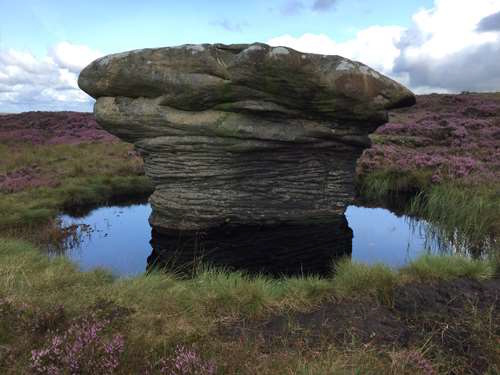
Writings and photograph courtesy of Mike Browell.
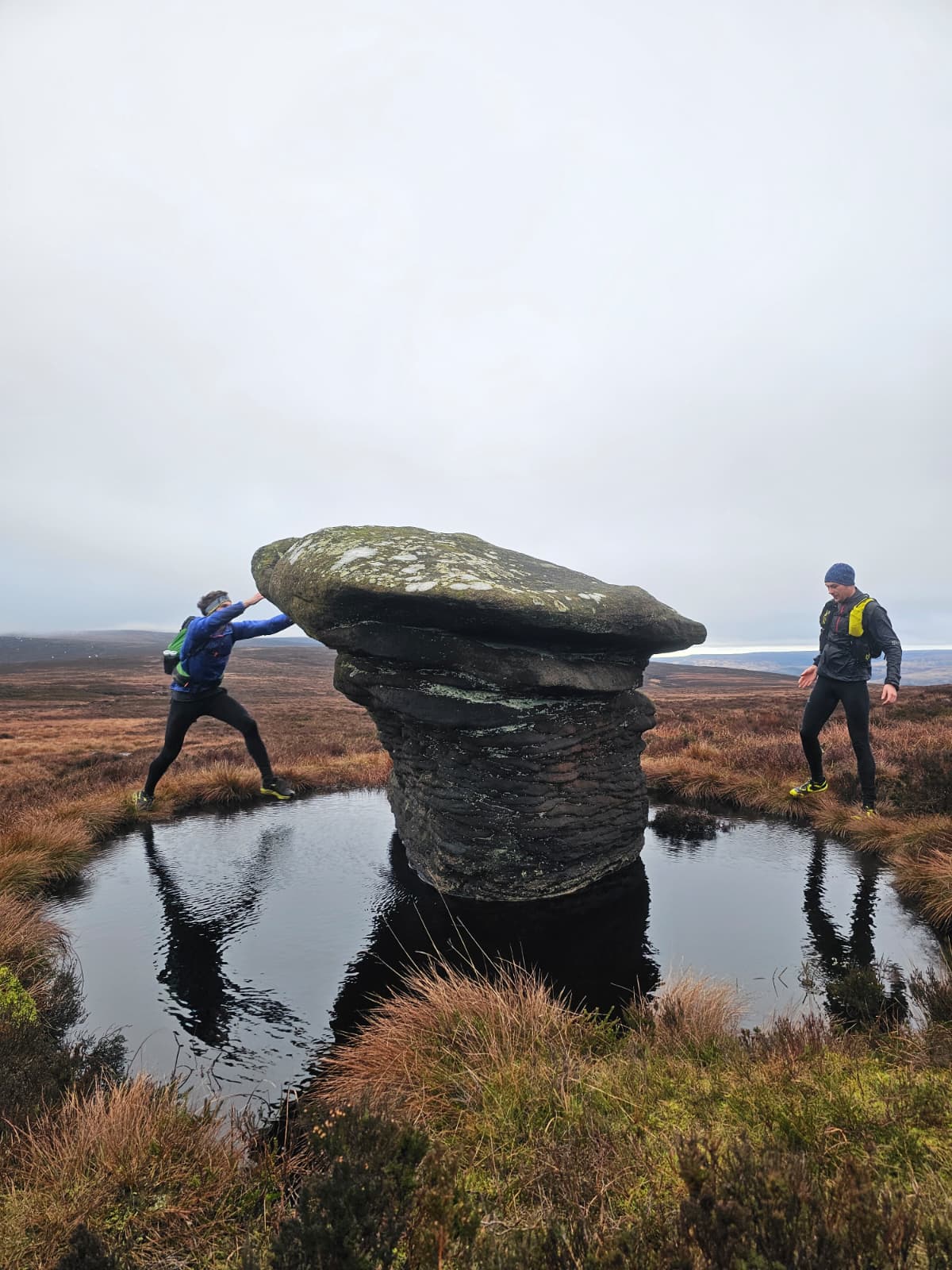

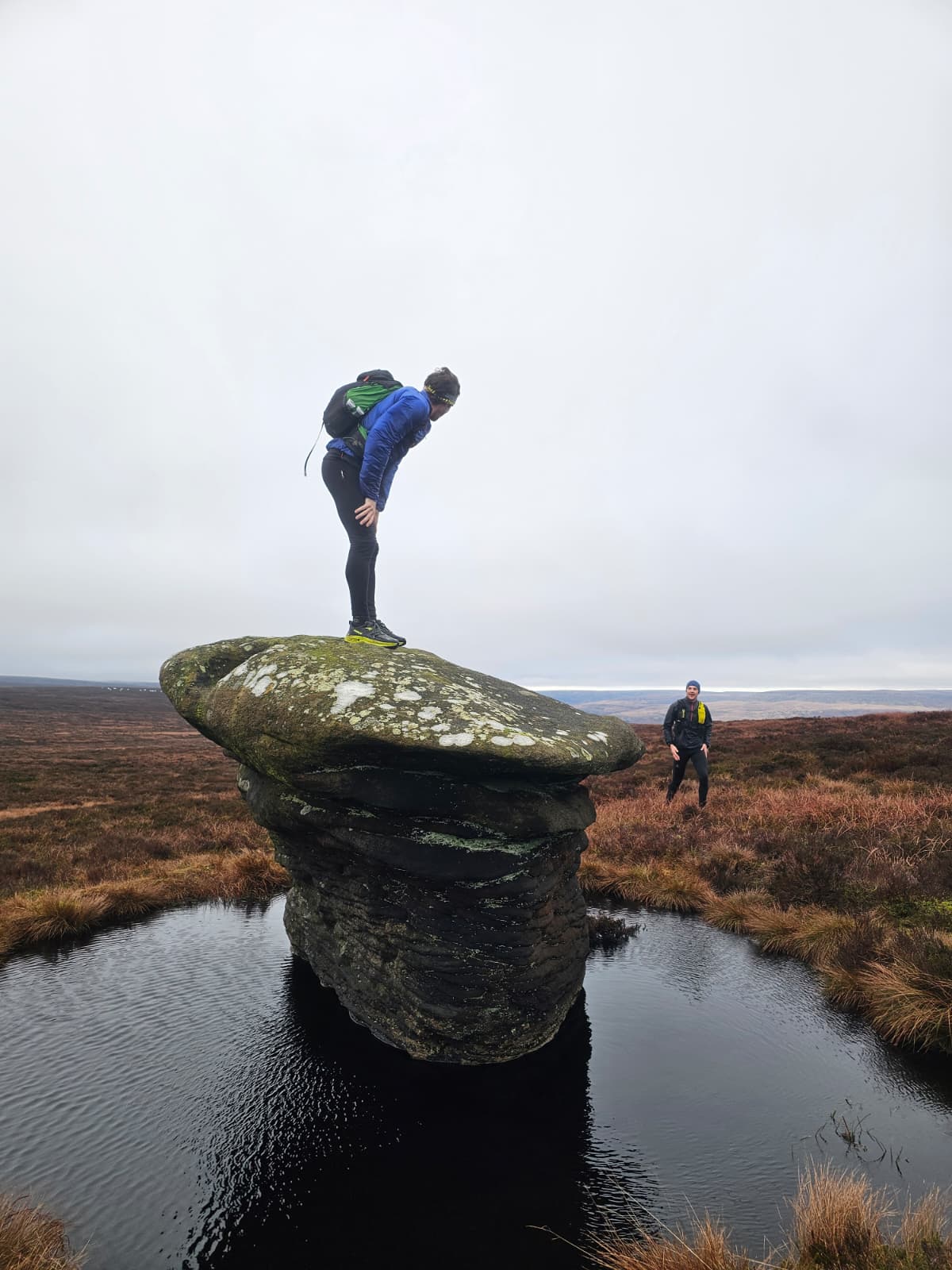
Ben Kelsey successfully summits the 1894 Stone partway around the 2025 Bradfield Boundary run, whilst Stu Walker and Tom Saville take notes.